
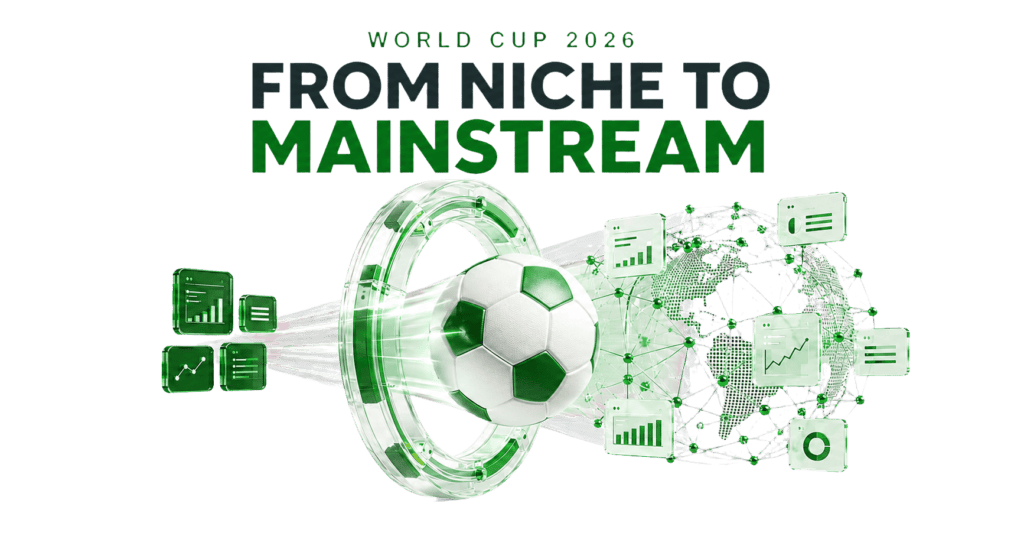
How the 2026 World Cup Brought Prediction Markets Into the Mainstream
The 2026 World Cup did more than bring football fans together. It also introduced a wider audience to prediction markets, where prices changed as expectations shifted throughout the tournament. Instead of placing a bet and simply waiting for the result, users could follow market sentiment, react to team news and trade their positions earlier.
As a result, 2026 World Cup prediction markets became part of the wider football conversation. Although they did not replace sportsbooks, the tournament showed how this format could make following major sporting events more interactive.
A NEW WAY TO FOLLOW FOOTBALL
The World Cup Created the Perfect Environment
The expanded tournament created more matches, more possible outcomes and more reasons for market prices to move.
Tournament Winner
Which country will lift the trophy?
Total Goals
Will the tournament pass the target?
Top Scorer
Who will finish with the most goals?
Group Qualification
Will the team reach the knockout stage?
Quarter-Finals
Will an Asian team reach the last eight?
Finalists
Which countries will reach the final?
Reported trading volume
Approximate users
National teams
Tournament matches
PRICES BECAME PROBABILITIES
Why Football Bettors Were Interested
Familiar football questions appeared in a new format. Prices moved as users bought and sold positions, giving supporters a live view of changing expectations. Depending on liquidity, a position could also be sold before the final outcome.
Users Could React Before the Final Result
A position did not always have to remain open until a team won or was eliminated. For example, users could sell their position when market prices changed and sufficient liquidity was available. As a result, they could react to new information before the final result. This flexibility made the experience more active throughout the tournament.
Position Opened
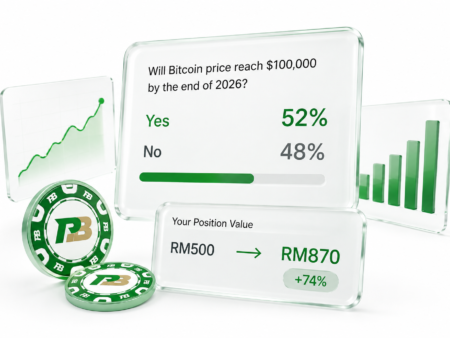
A team begins with a 30% implied chance of reaching the final.
Expectation Rises
The position may be sold instead of waiting for the semi-final result.
Exit Before Settlement
The position may be sold instead of waiting for the semi-final result.
TWO DIFFERENT EXPERIENCES
Prediction Markets vs Regular World Cup Betting
| Feature | Prediction market | Sportsbook |
|---|---|---|
| Pricing | Influenced by buying and selling | Set by the sportsbook |
| Format | YES/NO shares | Decimal or other odds |
| Early exit | Sell when liquidity is available | Cash-out may be offered |
| Settlement | Predefined resolution rules | Sportsbook rules |
Football Turned Probability Into a Live Experience
Every important tournament update could change how the market viewed a team’s chances.
Team News
Line-ups and injuries change expectations.
Match Result
A strong win moves tournament sentiment.
Price Movement
YES and NO positions react.
Hold or Sell
Users decide whether to exit early.
Prediction markets reflect what participants currently believe – not what must happen.
Prices can still be affected by emotion, limited liquidity, sudden news and larger participants.
World Cup predictions spread across social media, football communities and messaging groups. Market screenshots gave supporters a quick way to compare expectations.
A probability such as “35% chance of winning” was often easier to understand and share than a long list of decimal odds.
Before the group stage
Team A · 18% chance to win
After two victories
Team A · 31% chance to win ↑
After a key player injury
Team A · 24% chance to win ↓
Did Prediction Markets Replace Sportsbooks?
Prediction markets did not replace sportsbooks. Instead, the World Cup showed that both formats could serve different preferences. For example, sportsbooks continued to offer familiar odds and bet types. Meanwhile, prediction markets allowed users to trade positions as public expectations changed. Therefore, both formats could exist alongside each other without forcing users to choose only one.
Sportsbooks remained simpler for
- Match winners and handicaps
- Total goals, corners, booking, and player markets
- Familiar odds and MYR payments
Prediction markets appealed through
- The possibility of selling early
- Changing probabilities
- Broader tournament questions
WHAT HAPPENS NEXT
The Beginning of a Bigger Shift
The 2026 World Cup showed that prediction markets are no longer limited to specialist traders. A globally recognised tournament made live probability and event trading easier for ordinary football fans to understand.
Although the World Cup is over, this behaviour may continue across other major competitions. For example, users may follow changing market prices during club football and international tournaments. In addition, other major sporting events could create similar interest. However, prediction markets have not replaced sports betting. Instead, they have become a serious part of the wider online betting conversation.
Frequently Asked Questions
Why did prediction markets grow during the 2026 World Cup?
The expanded tournament created more matches and possible outcomes. Football also introduced event trading to an audience already familiar with analysing teams and probabilities.
Are prediction markets the same as sports betting?
No. Sportsbooks set odds for their markets, while prediction-market prices are influenced by participants buying and selling positions.
Are prediction markets available in Malaysia?
Availability depends on each platform, its current location restrictions and applicable rules. Players should confirm eligibility before registering or depositing.









Social Media Helped Drive Attention